Solving critical UX for Pro-traders of Prediction Markets
Project
Fireplace Pro
Year
2026

Fireplace is a professional trading terminal built on top of Polymarket, designed to solve the user-facing problems that arise as prediction markets scale. While Polymarket handles liquidity and settlement, Fireplace focuses on the layer above helping traders discover relevant markets, interpret what's moving and why, and execute with confidence. With tens of thousands of active markets and AI accelerating information production, manually browsing for opportunities breaks down fast. Fireplace addresses this with real-time data, social signal surfaces like leaderboards and whale wallet tracking, and a feed-driven experience anchored to live market activity and trader behaviour making prediction markets not just accessible, but legible and worth returning to.
Scope of Work
My role
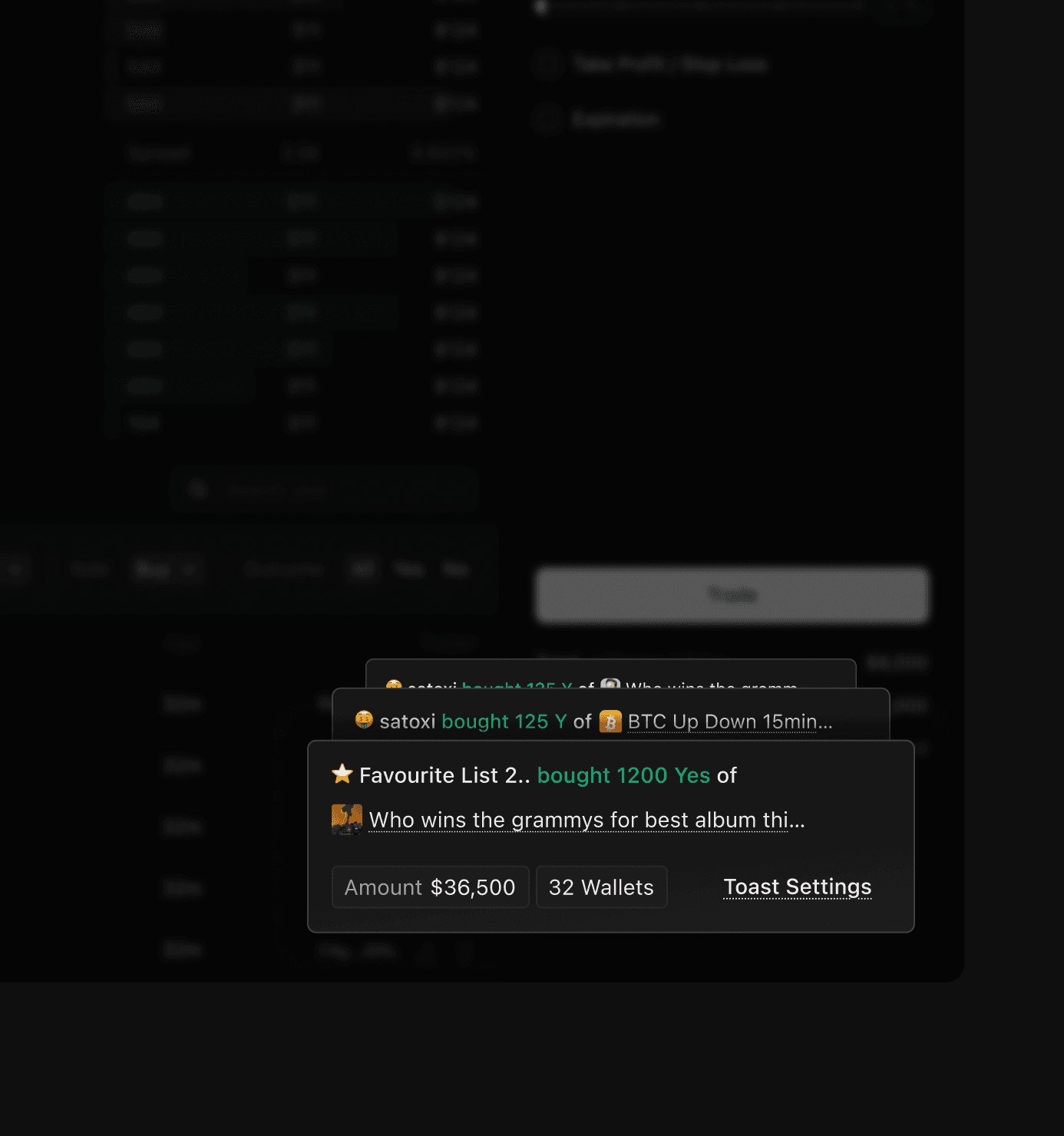
I worked closely with the founders to understand target audience which are active retail traders and professionals treating prediction markets as a distinct asset class and translated that into a cohesive product experience. My work spanned the full trading workflow: designing pro execution features along with robust tracking & notifications flow to keep traders informed in real time. Beyond execution, I designed the invite and gamification mechanics powering the referral and tier system & detailed whale tracker with portfolio and activity overviews all aimed at giving traders the conviction they need at the moment capital is committed.
My role
I worked closely with the founders to understand target audience which are active retail traders and professionals treating prediction markets as a distinct asset class and translated that into a cohesive product experience. My work spanned the full trading workflow: designing pro execution features along with robust tracking & notifications flow to keep traders informed in real time. Beyond execution, I designed the invite and gamification mechanics powering the referral and tier system & detailed whale tracker with portfolio and activity overviews all aimed at giving traders the conviction they need at the moment capital is committed.

The Trading Terminal
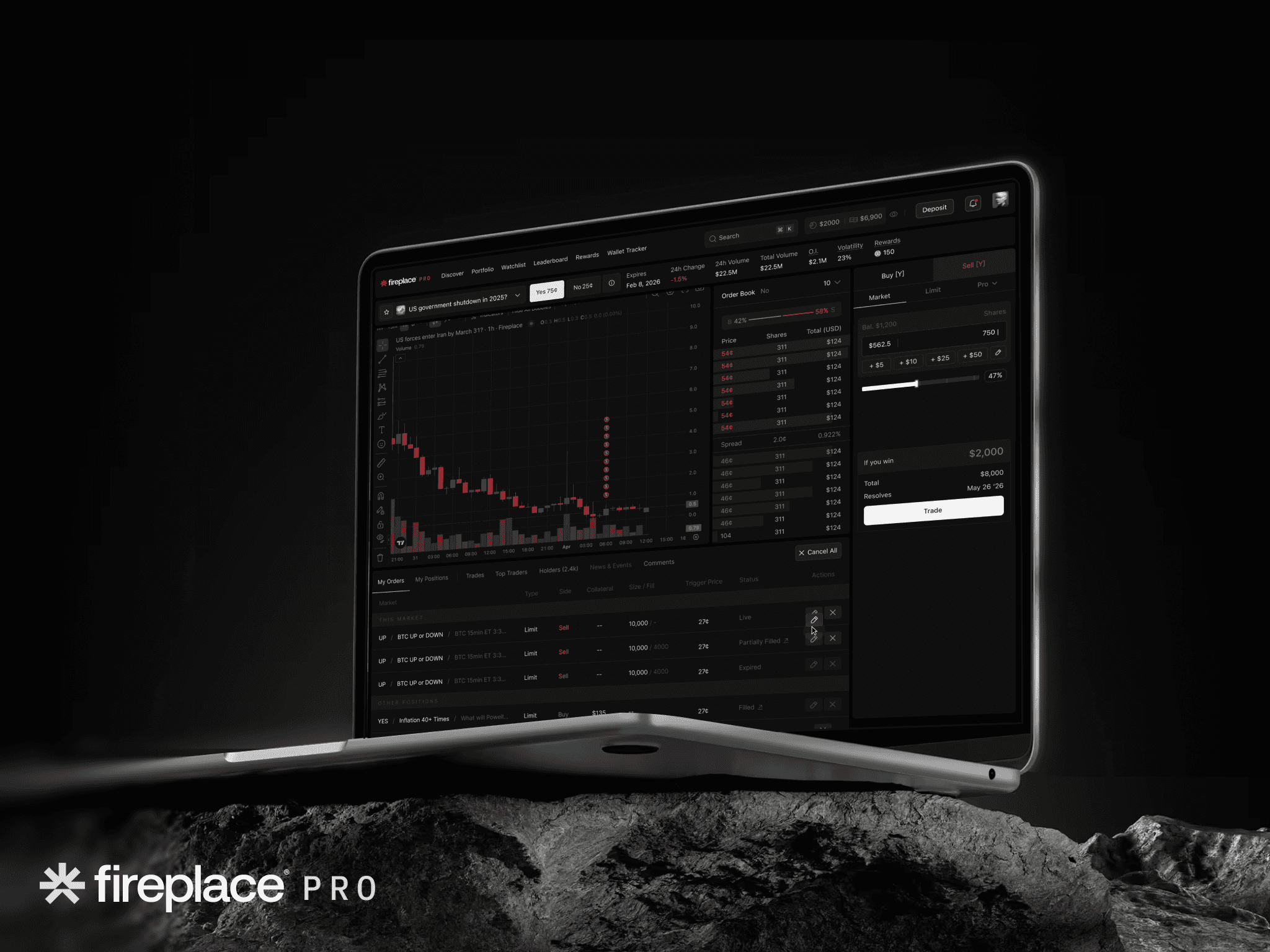
The terminal is Fireplace's execution core, unifying charts, order books, and controls into one continuous surface to eliminate context-switching at the moment speed matters most. I focused on the micro-interactions that make it feel genuinely pro: preset sizing shortcuts, an actions hub centralizing every order path, and inline order editing that replaced what's typically a multi-screen detour with a single click. I also designed the interaction models for advanced order types, Sticky Bid, Stop Limit, and Stop Market, giving traders conditional, price-triggered execution instead of manual monitoring. Each reduction in friction here serves one thesis: execution speed is inseparable from decision confidence.
The Trading Terminal
The terminal is Fireplace's execution core, unifying charts, order books, and controls into one continuous surface to eliminate context-switching at the moment speed matters most. I focused on the micro-interactions that make it feel genuinely pro: preset sizing shortcuts, an actions hub centralizing every order path, and inline order editing that replaced what's typically a multi-screen detour with a single click. I also designed the interaction models for advanced order types, Sticky Bid, Stop Limit, and Stop Market, giving traders conditional, price-triggered execution instead of manual monitoring. Each reduction in friction here serves one thesis: execution speed is inseparable from decision confidence.


Beyond the terminal's core execution paths, I designed Split and Merge, two arbitrage-native primitives that let traders manage both sides of a market's outcome pair directly, splitting a dollar into equal Yes and No positions to isolate the side worth holding, or merging existing Yes and No shares back into redeemable capital at a cost-effective exit, rather than routing through the open order book, with this FTUX for feature was introduced when the user triggers this feature a first time dialogue box appears making users aware of the feature. For position exits specifically, I turned Close Position into an evidence-based decision rather than a blind action, surfacing entry price, exit price, estimated PnL, and time-to-resolution in a single view, so a trader isn't just closing a position but confirming a fully reasoned one. I extended that same rigor to risk management with Take Profit and Stop Loss, letting traders pre-commit exit conditions at the point of entry, converting reactive, emotionally-driven exits into predefined, rules-based ones executed automatically when price thresholds are met.
Beyond the terminal's core execution paths, I designed Split and Merge, two arbitrage-native primitives that let traders manage both sides of a market's outcome pair directly, splitting a dollar into equal Yes and No positions to isolate the side worth holding, or merging existing Yes and No shares back into redeemable capital at a cost-effective exit, rather than routing through the open order book, with this FTUX for feature was introduced when the user triggers this feature a first time dialogue box appears making users aware of the feature. For position exits specifically, I turned Close Position into an evidence-based decision rather than a blind action, surfacing entry price, exit price, estimated PnL, and time-to-resolution in a single view, so a trader isn't just closing a position but confirming a fully reasoned one. I extended that same rigor to risk management with Take Profit and Stop Loss, letting traders pre-commit exit conditions at the point of entry, converting reactive, emotionally-driven exits into predefined, rules-based ones executed automatically when price thresholds are met.


Holder Intelligence & Data Scalability
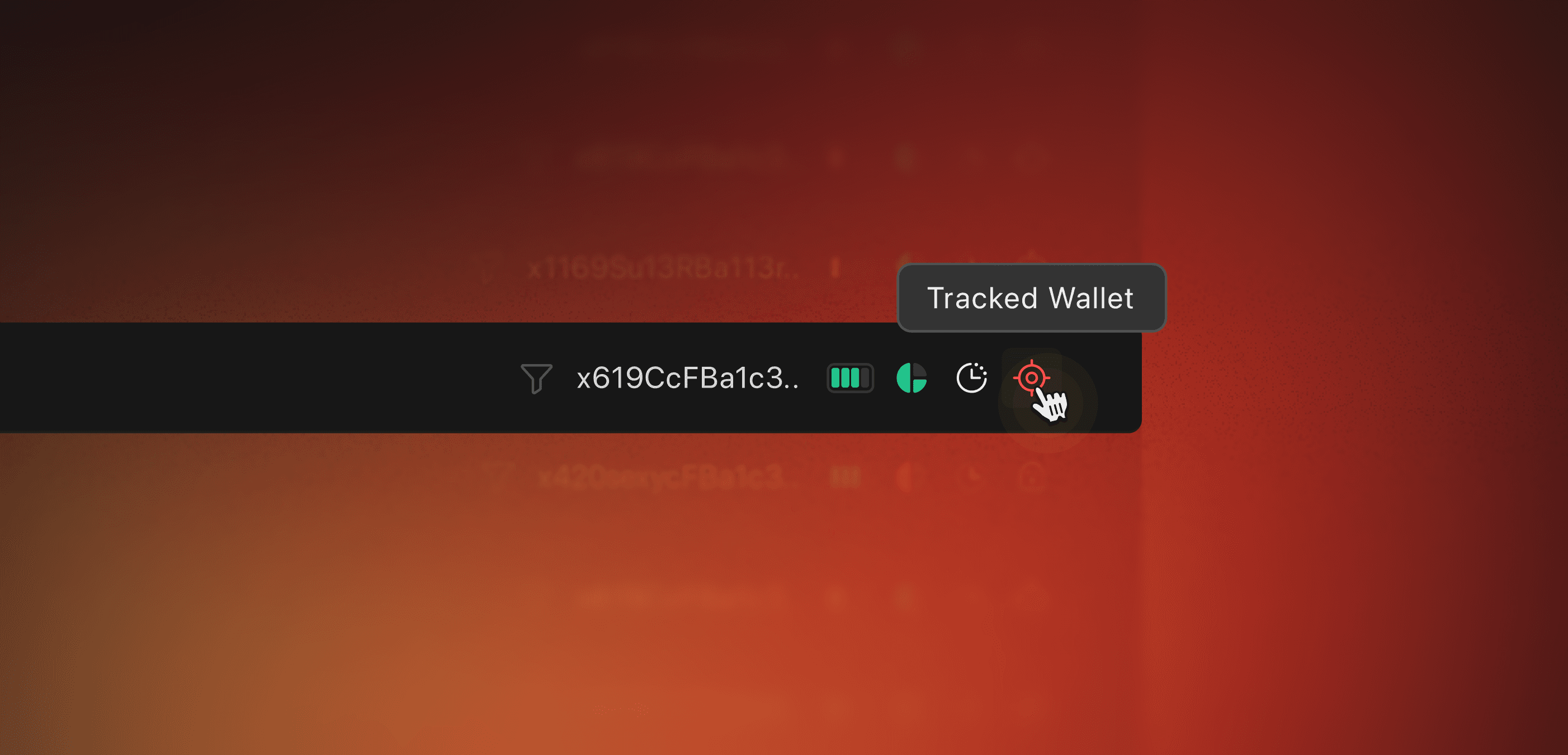
Prediction markets generate dense wallet-level signal, cash balance, PnL, wallet age, bot activity, insider flags, tracking status, but raw data isn't insight. I designed a custom icon-state system that compresses all of it into a single scannable row per holder, regardless of outcome. Each icon encodes its own signal tier through color and fill: bar-fills for balance, red-to-green splits for PnL, clock states for wallet age, distinct glyphs for bot or insider activity. This let dense, multi-dimensional data live in a footprint small enough to scan an entire holder list at once.
That system feeds a market-level output: a Market Strength Score, aggregating top-holder data across both outcomes into one directional signal, giving traders conviction behind a market's price action without manually cross-referencing wallets. The real design challenge was scalability: staying legible whether a market had ten holders or ten thousand, solved at the icon-system level rather than screen by screen.
Holder Intelligence & Data Scalability
Prediction markets generate dense wallet-level signal, cash balance, PnL, wallet age, bot activity, insider flags, tracking status, but raw data isn't insight. I designed a custom icon-state system that compresses all of it into a single scannable row per holder, regardless of outcome. Each icon encodes its own signal tier through color and fill: bar-fills for balance, red-to-green splits for PnL, clock states for wallet age, distinct glyphs for bot or insider activity. This let dense, multi-dimensional data live in a footprint small enough to scan an entire holder list at once.
That system feeds a market-level output: a Market Strength Score, aggregating top-holder data across both outcomes into one directional signal, giving traders conviction behind a market's price action without manually cross-referencing wallets. The real design challenge was scalability: staying legible whether a market had ten holders or ten thousand, solved at the icon-system level rather than screen by screen.




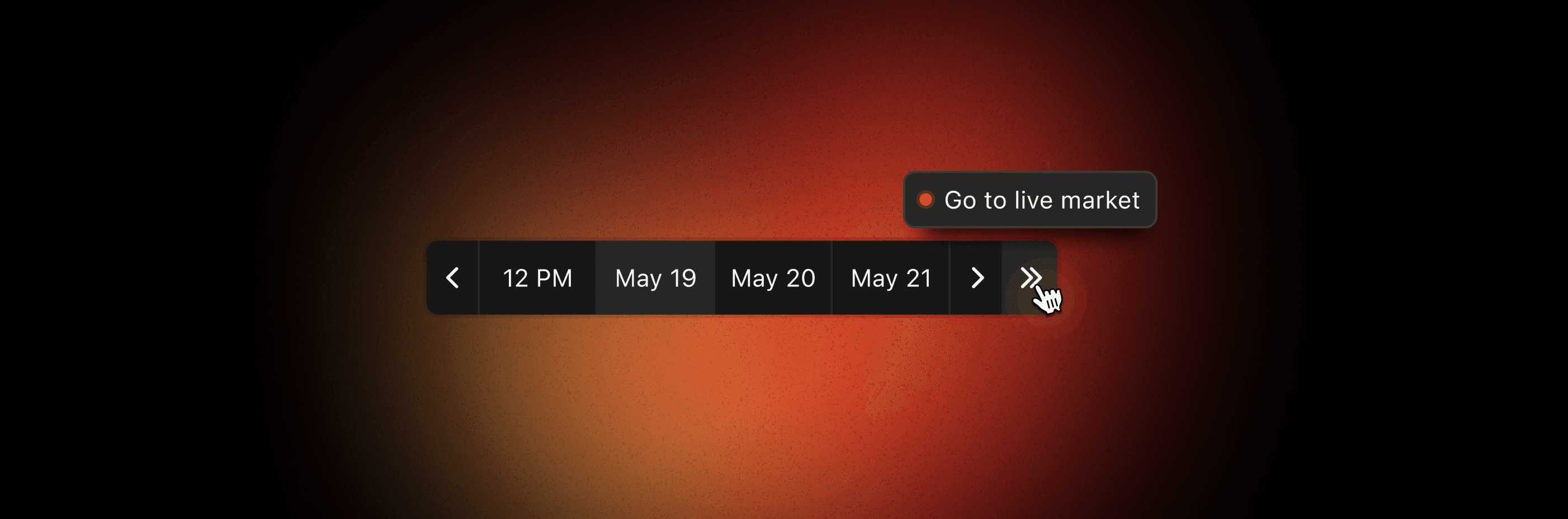
Markets like BTC/ETH 15min, Elon tweet counts, daily up/down, and many repeat on a fixed epoch, interestingly prior outcomes carried real signal for the next markets. This felt like a UX problem waiting to be solved: traders had to navigate between rounds and see outcome history to make an informed trade decision. I designed a compact series navigator with hover states that displayed market & outcome details without leaving the trade view of current market. Countdown states scale across cadence too, from live minute timers to date-based windows, keeping urgency legible whether a series resolves in minutes or days.
Markets like BTC/ETH 15min, Elon tweet counts, daily up/down, and many repeat on a fixed epoch, interestingly prior outcomes carried real signal for the next markets. This felt like a UX problem waiting to be solved: traders had to navigate between rounds and see outcome history to make an informed trade decision. I designed a compact series navigator with hover states that displayed market & outcome details without leaving the trade view of current market. Countdown states scale across cadence too, from live minute timers to date-based windows, keeping urgency legible whether a series resolves in minutes or days.




Plot multimarket chart for stark comparison between related grouped markets
Plot multimarket chart for stark comparison between related grouped markets


Wallet tracking was one of Fireplace's most distinctive features in the prediction market space, no other product offered this level of depth for tracked wallets. Traders could build tracked lists directly from the leaderboard, applying filters (like top 50 wallets by weekly volume) to surface preferred Polymarket traders and save that exact query as a list, a capability that was genuinely novel at the time.
Beyond individual tracking, a dedicated section aggregated net flow across an entire tracked list, signaling markets that were seeing significant buy or sell pressure from their tracked wallets, effectively a signal of collective conviction or distrust, visualized through volume.
The list system itself supported two modes: static lists, fixed at creation, and dynamic lists, which stayed live against the leaderboard query that built them. A dynamic list created from "top 50 wallets, $100k+ weekly volume" would continuously update as the leaderboard shifted, always reflecting the current top 50 rather than a frozen snapshot.
Wallet tracking was one of Fireplace's most distinctive features in the prediction market space, no other product offered this level of depth for tracked wallets. Traders could build tracked lists directly from the leaderboard, applying filters (like top 50 wallets by weekly volume) to surface preferred Polymarket traders and save that exact query as a list, a capability that was genuinely novel at the time.
Beyond individual tracking, a dedicated section aggregated net flow across an entire tracked list, signaling markets that were seeing significant buy or sell pressure from their tracked wallets, effectively a signal of collective conviction or distrust, visualized through volume.
The list system itself supported two modes: static lists, fixed at creation, and dynamic lists, which stayed live against the leaderboard query that built them. A dynamic list created from "top 50 wallets, $100k+ weekly volume" would continuously update as the leaderboard shifted, always reflecting the current top 50 rather than a frozen snapshot.






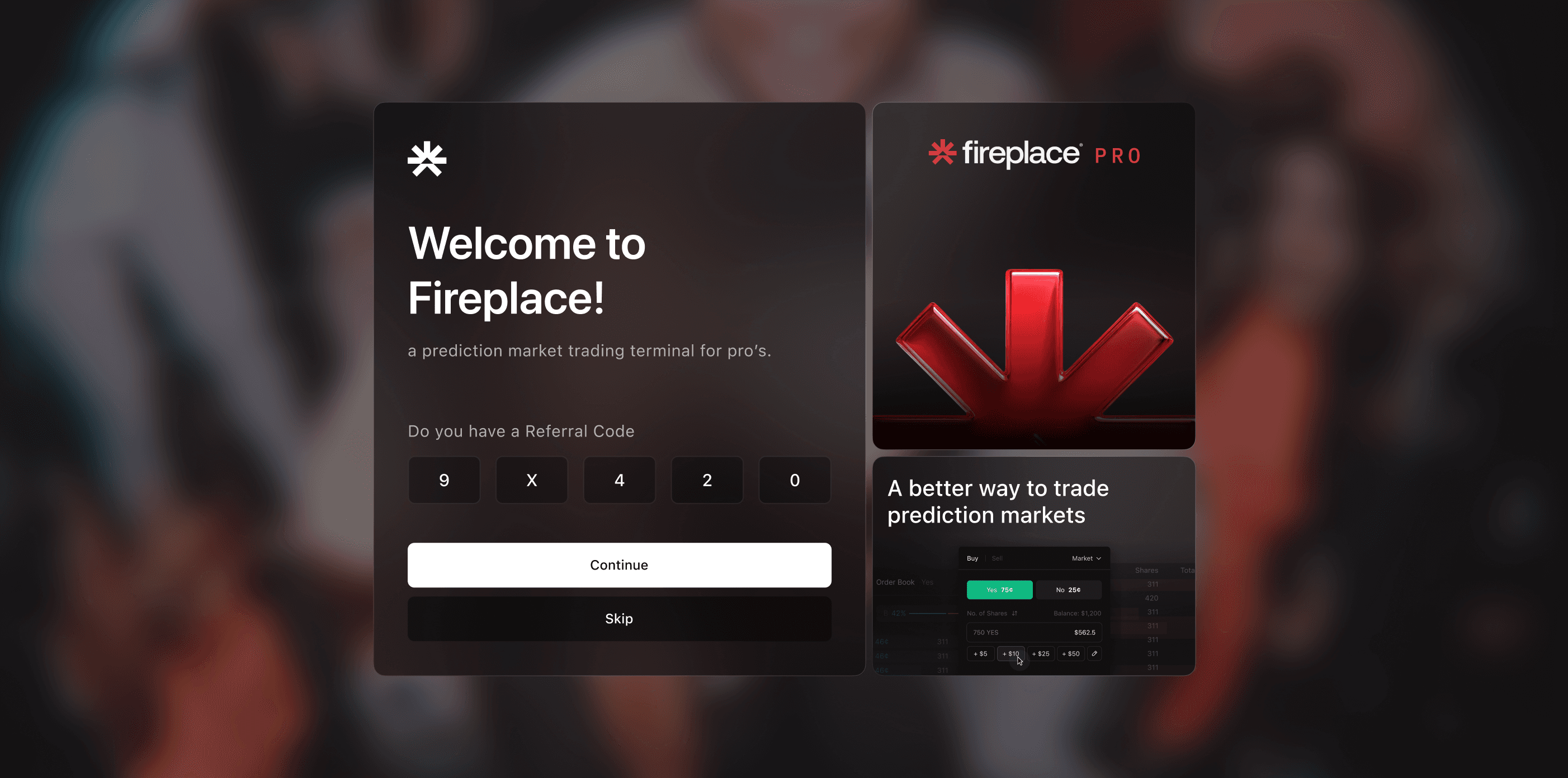


Progression was structured through a five-tier Prestige system, each tier unlocking increasing fee discounts and referral earning multipliers, from Prestige 1 baseline structure to Prestige 5 getting users 10% fee reduction and expanded multi-level earning share. Users earned not just from direct referrals but from a share of what those referrals earned in turn, extending three levels deep.
Visualizing a three-level earning hierarchy was the core design challenge. I drew inspiration from flow-mapping and node-graph tools to represent the referral network as a traversable tree rather than a flat list, with hover states surfacing exact earnings contributed by each individual node in the chain. This turned an abstract, multi-tier commission structure into something a user could actually parse and trust at a glance.
Progression was structured through a five-tier Prestige system, each tier unlocking increasing fee discounts and referral earning multipliers, from Prestige 1 baseline structure to Prestige 5 getting users 10% fee reduction and expanded multi-level earning share. Users earned not just from direct referrals but from a share of what those referrals earned in turn, extending three levels deep.
Visualizing a three-level earning hierarchy was the core design challenge. I drew inspiration from flow-mapping and node-graph tools to represent the referral network as a traversable tree rather than a flat list, with hover states surfacing exact earnings contributed by each individual node in the chain. This turned an abstract, multi-tier commission structure into something a user could actually parse and trust at a glance.


Closing Note,
Working out of a hacker house to build the trading experience for prediction markets was an immense opportunity. The product was early enough that I was building on the pre-launch side of something the world hadn't seen yet, there was no existing reference for what a professional trading terminal for prediction markets should even look like.
I was humbled when the product reached nearly $100K in trading volume on launch day alone.
Building at a global scale, on tight shipping cycles, as the solo Lead Product Designer, was one of the most demanding stretches of my design career. It forged me to develop sharper design instinct, leverage AI workflow to ship and become far more opinionated towards design I ship.
Closing Note,
Working out of a hacker house to build the trading experience for prediction markets was an immense opportunity. The product was early enough that I was building on the pre-launch side of something the world hadn't seen yet, there was no existing reference for what a professional trading terminal for prediction markets should even look like.
I was humbled when the product reached nearly $100K in trading volume on launch day alone.
Building at a global scale, on tight shipping cycles, as the solo Lead Product Designer, was one of the most demanding stretches of my design career. It forged me to develop sharper design instinct, leverage AI workflow to ship and become far more opinionated towards design I ship.
More Projects

Trusted by many
Trusted by many